
Road Tripping along Quebec’s Côte-Nord
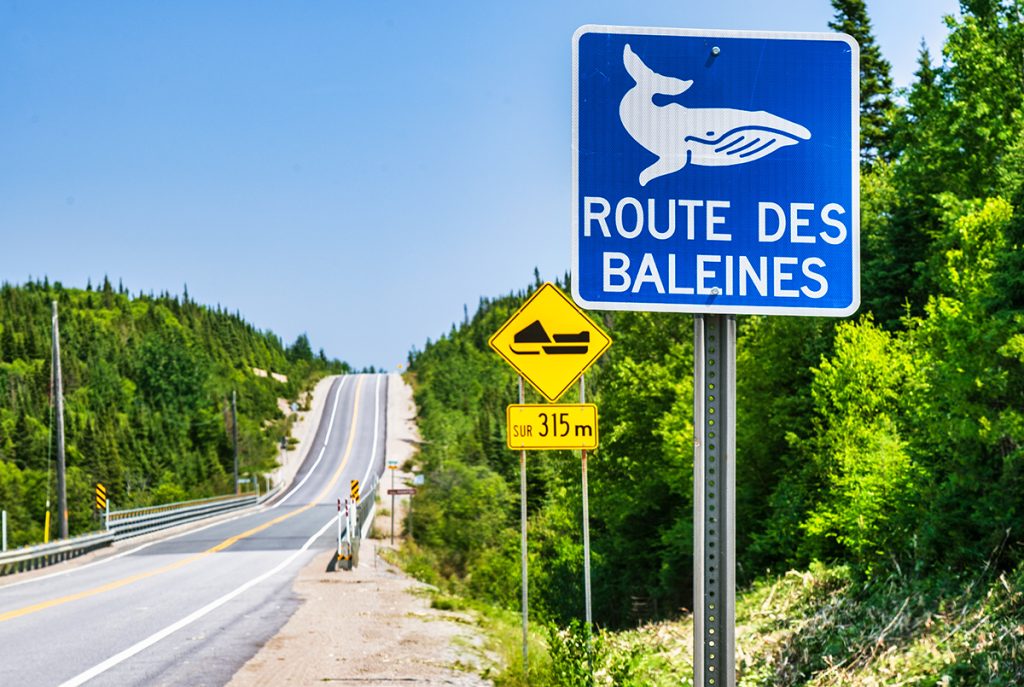
The coastal route in Quebec’s Côte-Nord ranks among Canada’s great road trips. From Tadoussac at the mouth of the Saguenay Fjord, Highway 138 follows the north shore of the St. Lawrence for about 840 kilometres to the end of the road at Kegaska, not far from the border with Labrador. The most popular section is the 650-kilometre stretch from Tadoussac to Havre St-Pierre, the main jumping-off point to visit Mingan Archipelago National Park Reserve, a group of islands just offshore.
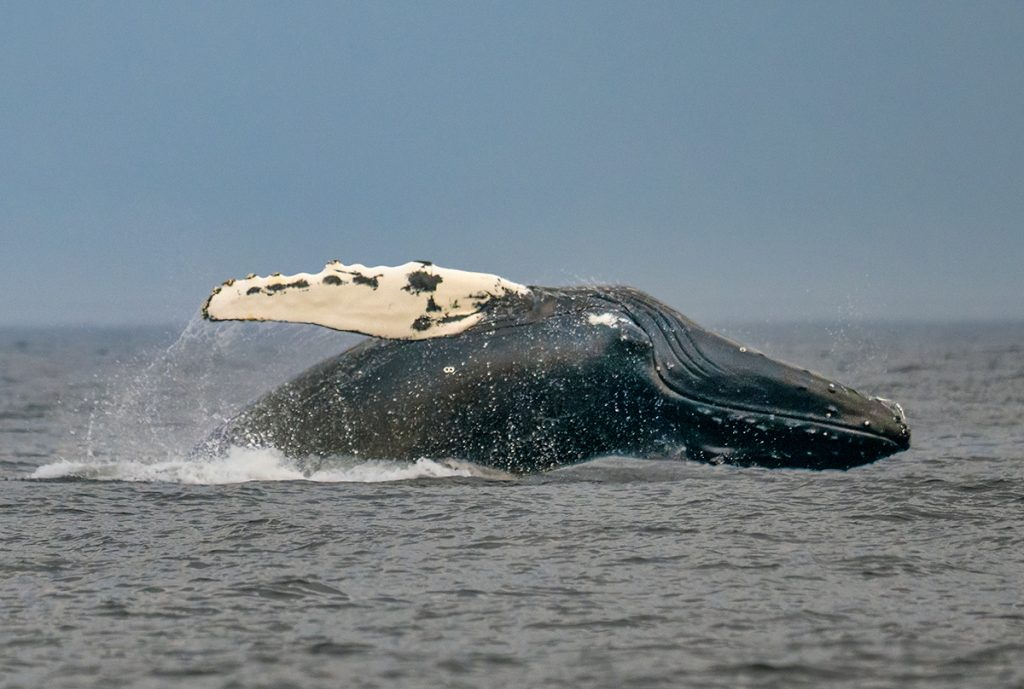
The road is known as the Route des Baleines, or Whale Route, with a reputation for being among the best places in the world for whale watching. An astounding 13 whale species frequent these waters. Several places along the route offer whale watching excursions, plus it is not at all unusual to see whales right from shore.
The trip combines spectacular coastal and mountain scenery with wildlife, including whales and seabird colonies, historic sites, a chance to connect with Innu culture, parks and nature preserves galore, waterfalls, and picture-perfect coastal communities. As a bonus, the traffic dwindles as we venture farther east, even in summer.
Tadoussac
With its strategic location at the confluence of the Saguenay and St. Lawrence Rivers, Tadoussac has long been an important trading centre, first to Indigenous groups of the region, then to European traders who set up shop at the beginning of the 17th century. We can visit a replica of the post established by Pierre de Tonnetuit in 1600, considered the first fur trading post in Canada.
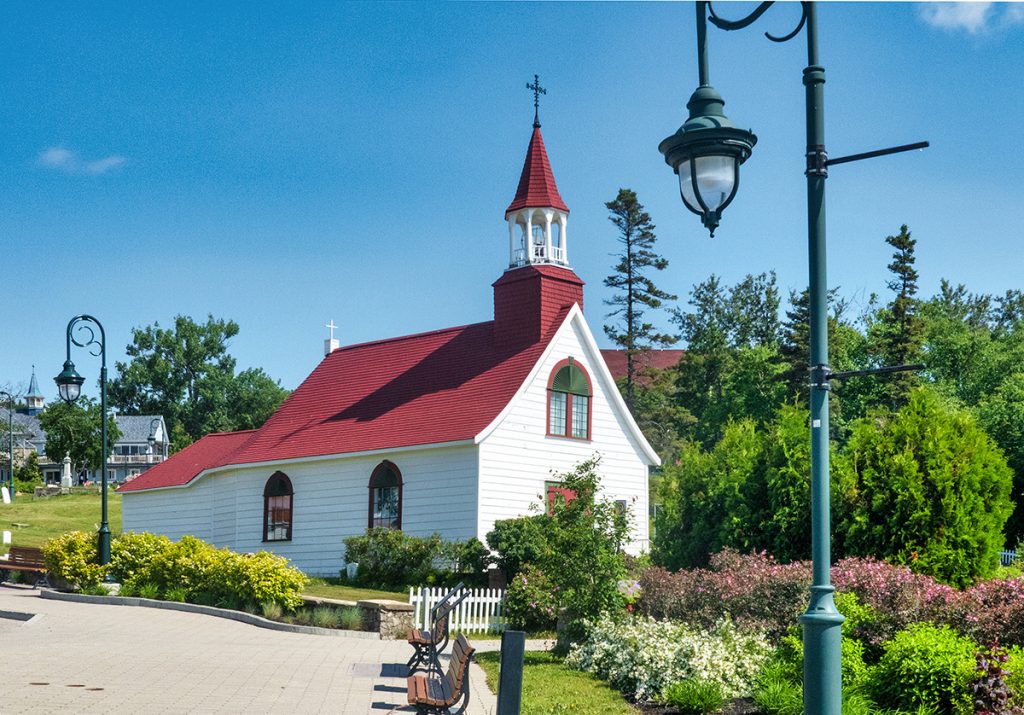
Don’t miss Tadoussac’s “Little Chapel”. Built in 1747, it is thought to be the oldest wooden church in North America. Now a National Historic Site, the chapel features displays from the New France colonial era.

Dominating the waterfront is the elegant Hotel Tadoussac with its gleaming white facade and brilliant red roof. The original hotel was built in 1864 and was replaced by the current building in 1942.
Much of Tadoussac’s charm comes from its unparalleled setting. It is a member of the World’s Most Beautiful Bays club, representing 42 bays in 25 countries, and one of only two in Canada, the other being the Bay of Chaleur between Quebec’s Gaspé Peninsula and New Brunswick. Tadoussac also belongs to the Most Beautiful Villages of Quebec association. Take a walk along the raised boardwalk overlooking the beach and bay to best appreciate both the scenic and historic nature of Tadoussac.
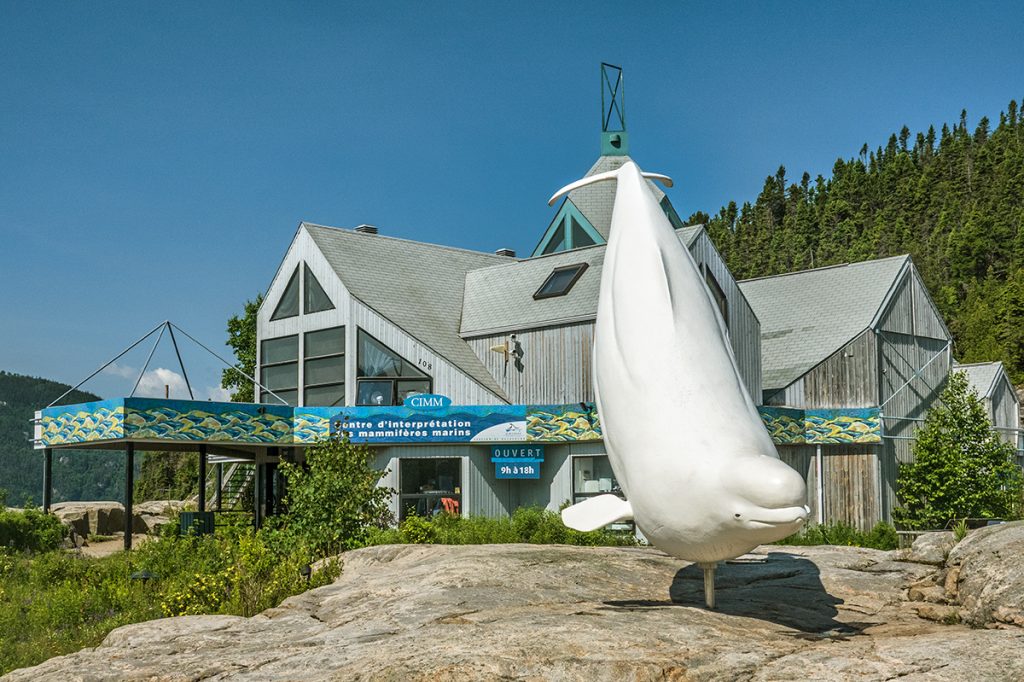
The Marine Mammal Interpretation Centre stands out as a top attraction. The impressive interior features several exhibits and whale skeletons, including a 13-metre-long sperm whale. And nothing beats walking inside the ribcage of a North Atlantic right whale to get a better idea of its immense size. Naturalists on hand can answer questions and provide further information. Stand on the rocks near the centre’s entrance, and you just might spot beluga or minke whales in the river estuary.
Tadoussac to Baie-Comeau
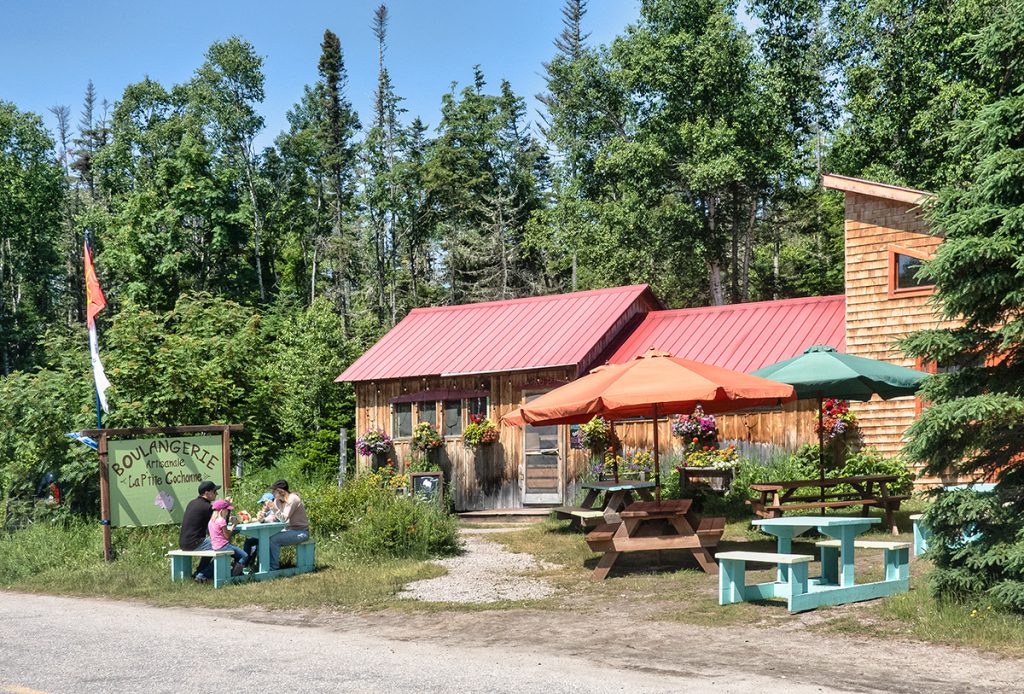
This beautiful stretch of road features a string of wonderful places to stop. At Grandes-Bergeronnes, take the road towards the sea (Rue de la Mer) to a hidden gem that you would never find if you didn’t know about it in advance. The Boulangerie Artisanale La P’tite Cochonne (or the Little Pig) is a small bakery and sandwich shop with a big reputation. We were especially impressed with their dried sausages, which made excellent picnic fare.
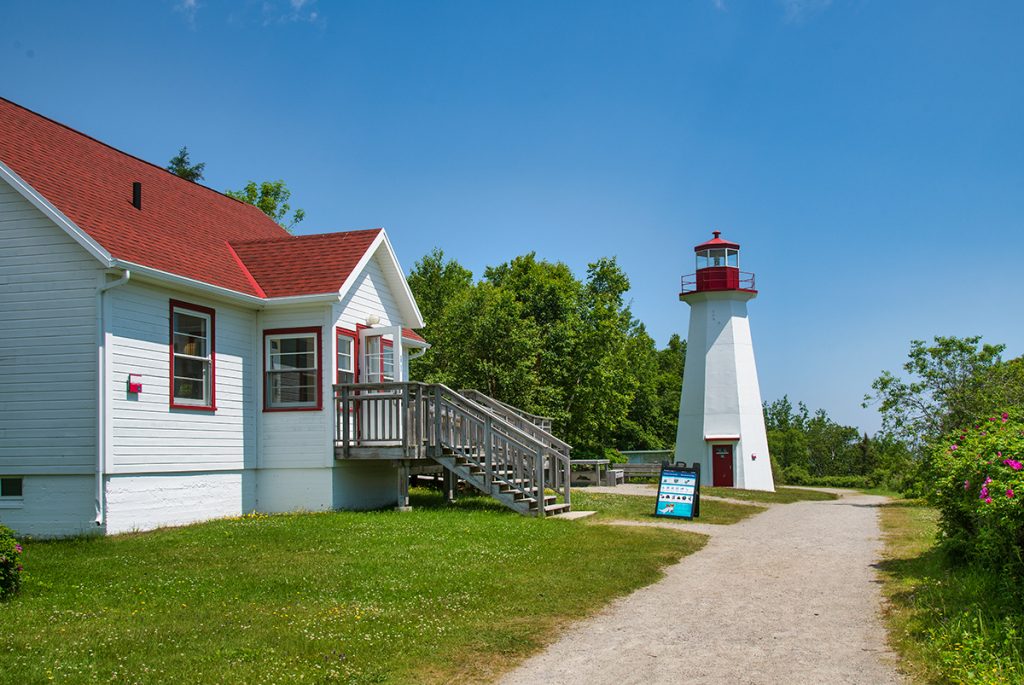
Just past Grandes-Bergeronnes along Highway 138, we come to the Cap de Bon-Désir Interpretation and Observation Centre. Operated by Parks Canada, the former lighthouse station features exhibits on the role of lighthouse keepers, as well as the Saguenay-St. Lawrence Marine Park, which includes this stretch of the St. Lawrence River as well as the Saguenay Fjord.
Head to the expansive rocky outcropping on the water’s edge, considered a top place to watch for whales right from shore. On-site Parks Canada interpreters help visitors spot whales and other marine life. A bonus is that you can simply relax on the rocks and enjoy the view, or have a picnic lunch.

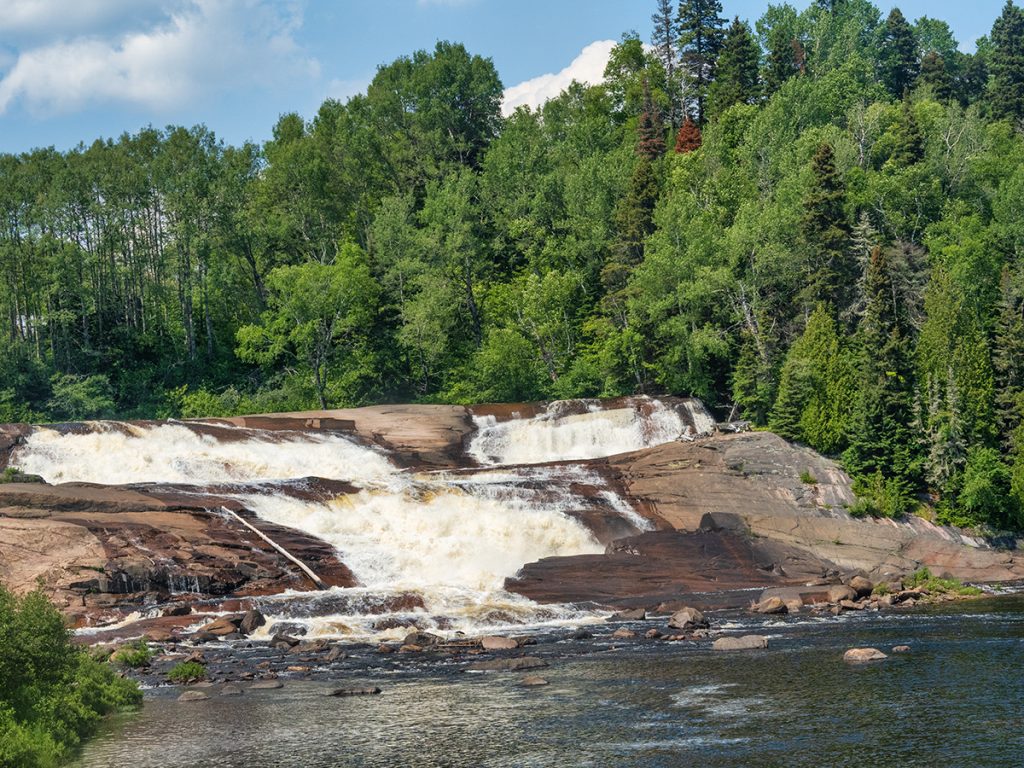
Our favourite of the many small towns along the route was Longue-Rive, a pretty spot where the Sault-au-Mouton River empties into the St. Lawrence. A short hiking trail leads along the rapids and waterfalls to a suspension bridge crossing the mouth of the river, while another short walk goes to a bird-rich salt marsh.
Pointe-aux-Outardes and Baie-Comeau
A few kilometres before Baie-Comeau, a road heads south to Pointe-aux-Outardes (Goose Point), a point of land of dunes and forests bordered by a sandy beach, and home to Pointe-aux-Outardes Nature Park. The nature park preserves and protects the rich biodiversity of this special area, while allowing visitors to experience and enjoy the flora and fauna.

A network of nature trails winds through the area. The park’s head guide, Fred, took us on an easy 2.5-kilometre nature walk that explores the rich array of ecosystems. We learned a lot about the unique salt marsh (one of the largest in Quebec), the fragile dunes and alder forest, and the abundance of life in the healthy boreal forest.

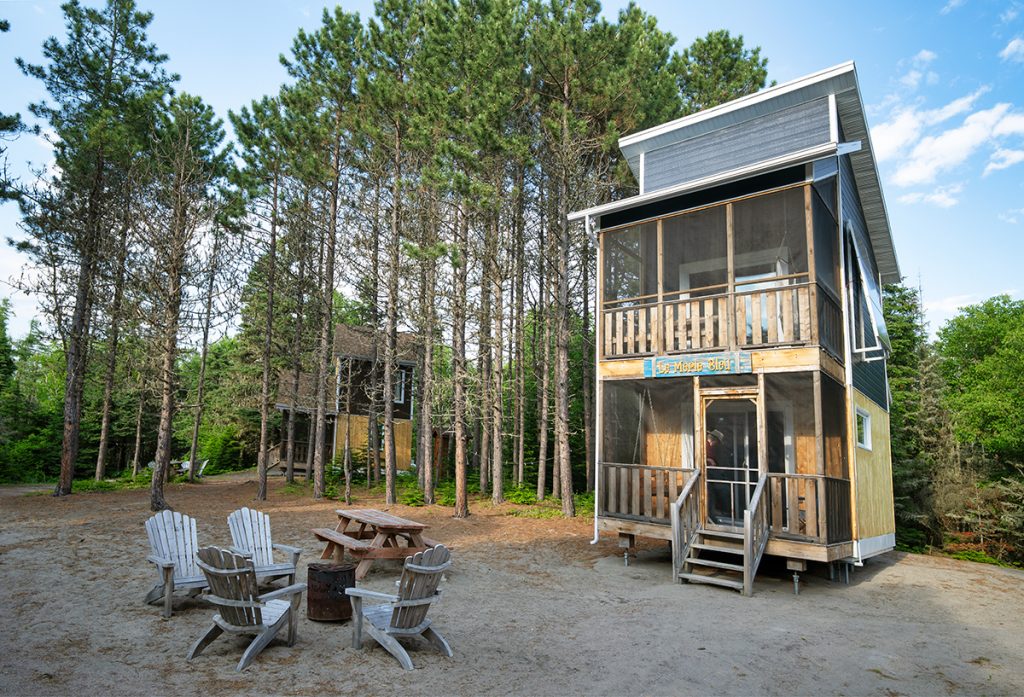
The best way to appreciate the park is to spend the night in the gorgeous surroundings. Besides a campground, you could opt to stay in one of the park’s giant “birdhouse” cottages, as we did. Narrow and tall like a birdhouse, our cottage “Le Merle Blue” (bluebird) ranks among the most imaginative accommodations we’ve stayed at anywhere. The dining table had a glass covering over a series of actual birds’ nests, and even our bed resembled a nest with a jumble of sticks circling the mattress.
If you prefer accommodation on the more traditional side, a great option is the Hotel Le Manoir in nearby Baie-Comeau. This elegant 4-star French colonial-style hotel has an ideal setting overlooking the bay in the St. Lawrence River.
Sept-Isles

A hub for culture and nature, this small city lies about 230 kilometres farther along Highway 138 from Baie-Comeau. The Innu culture features prominently here, the main Indigenous group native to northern Quebec and Labrador.
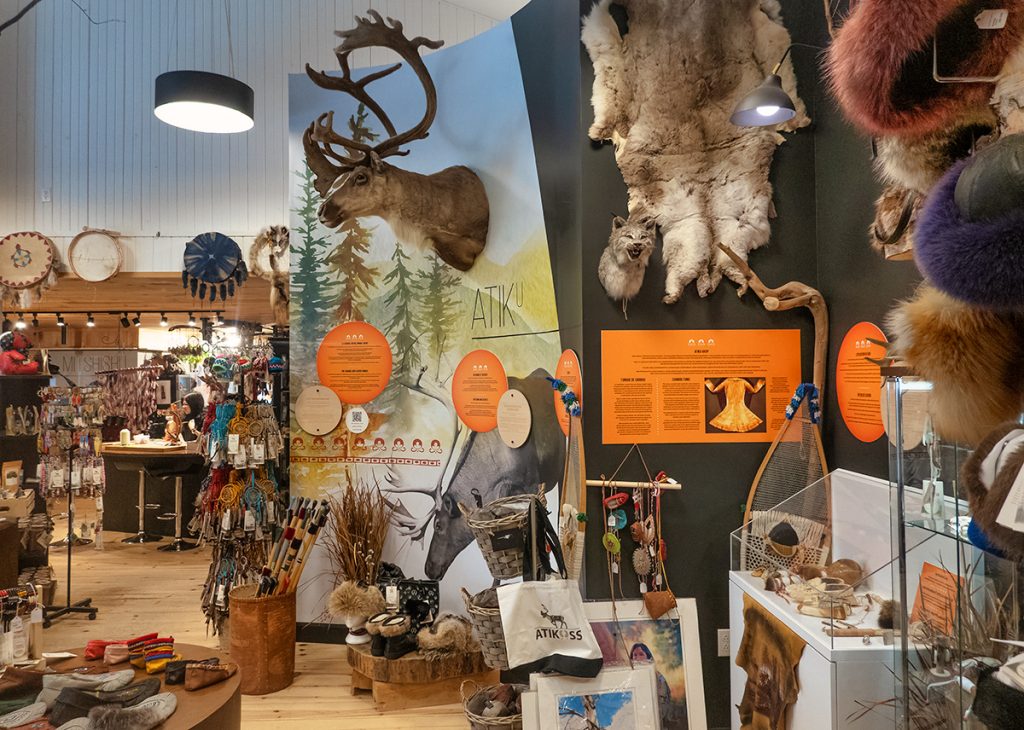
A must-visit is the Atikuss-Maskisin Économusée. As the name suggests, an economuseum functions both as a traditional museum with exhibits and interpretive panels, and also has an economic component, since most items are for sale. We find everything from moccasins and boots made from caribou hide to beaver products, various forms of artwork, jewelry and more. You may also see some skilled craftspeople at work.

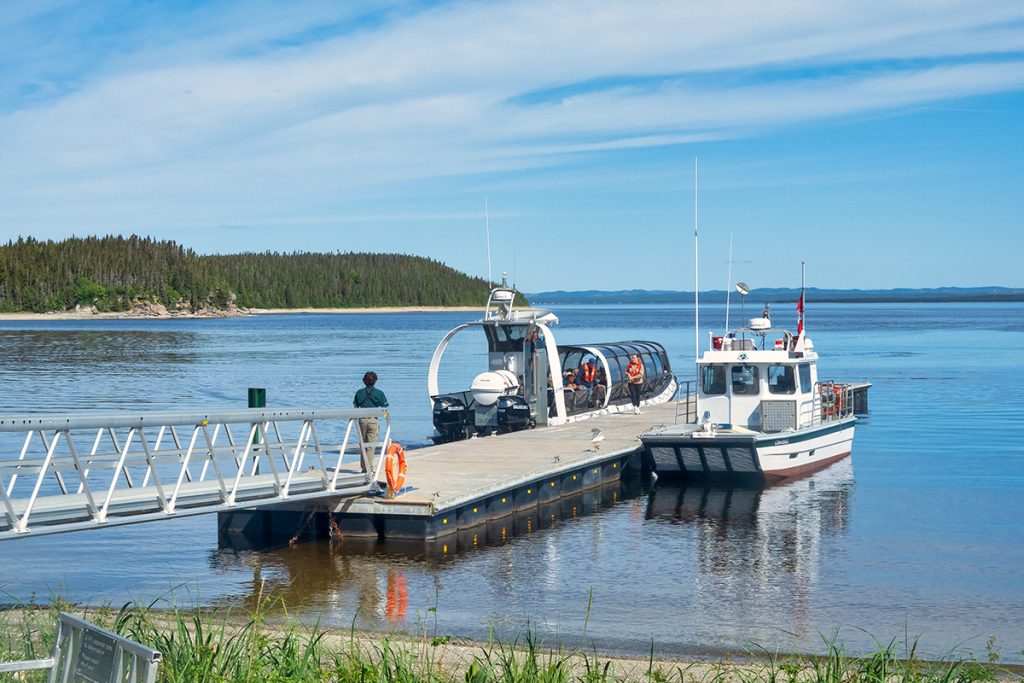
Our zodiac excursion with Croisière Sept-Îles. turned out to be the highlight of our visit. We cruised by all seven islands in the archipelago, each with its own specialty. For example, Corossol Island has a bird sanctuary with razorbills, eiders, murres, black guillemots and other seabirds. Blue mussels are cultivated on Grosse Boule Island, while Grand Basque Island features hiking trails and wilderness campsites.


It was also our best whale watching experience on the Whale Route. We spotted several minke whales, but the wow moments were seeing humpback whales breaching. Our boat driver-guide Guillaume commented that it was one of the most extraordinary encounters he’d had that season.
Manitou Falls
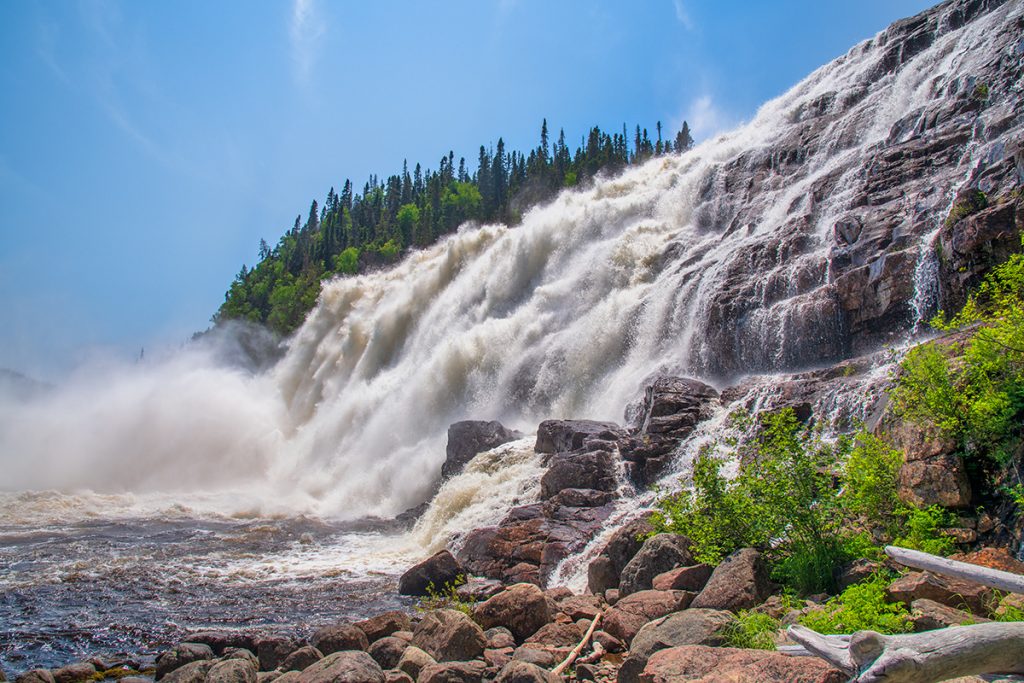
Scenic viewpoints abound along the route, but for sheer dramatic power, it’s hard to beat Manitou Falls, about 85 kilometres east of Sept-Isles near Riviere-au-Tonnerre. From the visitor centre beside the highway, a short but steep trail (mostly along wooden steps) descends into the canyon. One set of falls partway down is impressive in its own right, but the main attraction is yet to come. From the bottom, we look up at the imposing wall of water thundering down the 35-metre waterfall.

Longue-Pointe-de-Mingan

This coastal village sits near the western end of Mingan Archipelago National Park Reserve, a grouping of around a thousand islands spread over a 150-kilometre stretch. The park protects varied habitats from boreal forest to salt marshes, and wildlife, including seabirds, whales, and other marine mammals. But most remarkable of all, the park has the largest concentration of monoliths in Canada.
Longue-Pointe is one of the two main departure points to visit the islands. Stop first at the Parks Canada visitor centre in town to get oriented. You can take day excursions with La Famille Loiselle to visit some of the nearby islands.
Topping our list of special places in the park is Île aux Perroquets (Parrot Island), named for the puffins, sometimes referred to as “sea parrots”, that nest here in summer. Boat excursions stop for about an hour at the island, providing excellent chances to watch and photograph these amazing birds at fairly close range. Try to time your visit with high tide when the puffins stay close to the island.
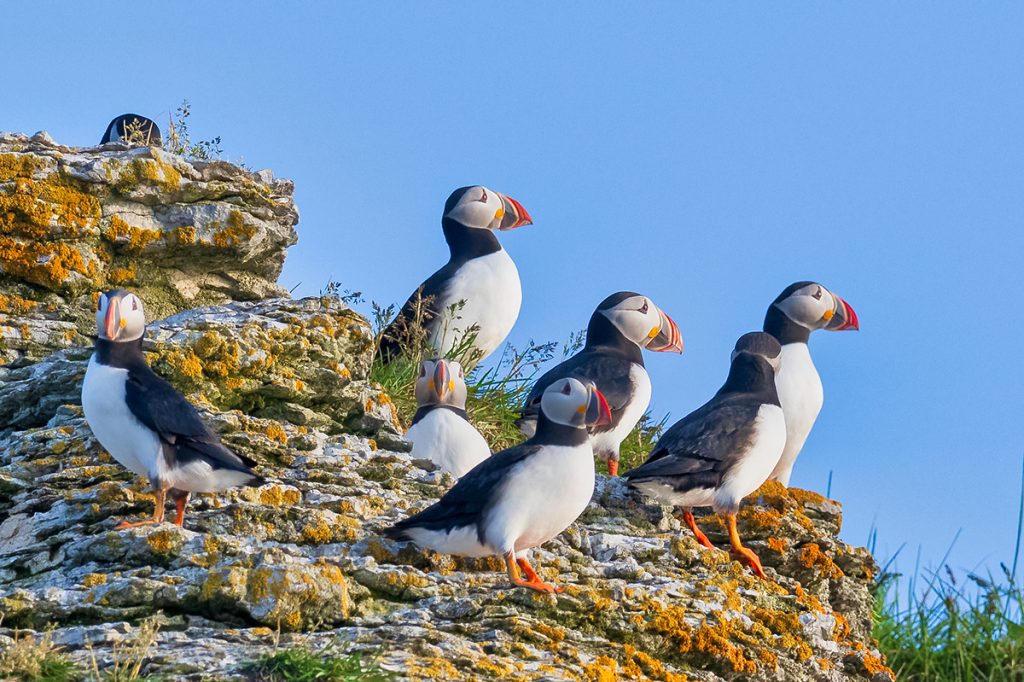
While puffins steal the show, the island also hosts a huge number of razorbills and other seabirds. Another option is to arrange to stay the night at the island’s Lighthouse Inn with accommodation in the former lighthouse keeper’s residence. Book far in advance since space is limited.
If you want to spend the night in Longue-Pointe, La Famille Loiselle also has a campground. Besides traditional campsites, they have some fully equipped travel trailers situated on the beach, a great alternative combining comfort and convenience with an attractive beachside setting.
Havre St-Pierre

About 50 kilometres farther along the highway brings us to Havre St-Pierre, the main jumping off point for visits to the Mingan islands. Boat excursions run to the islands that have most of Mingan’s famous monoliths. Quarry Island stands out with its rugged coastline, hiking trails through the forest and along rocky beaches, and of course, plenty of eroded limestone monoliths. Niapiskau Island, next to Quarry Island, has some of the largest monoliths concentrated in one main area.

At the popular campground on Quarry Island, you can choose between a tent site or ready-to-camp oTENTiks. We would highly recommend staying here for a few days. Although you can see the top places on a day excursion, staying a while provides the chance to appreciate this special place, and to see the monoliths at different tide levels and in low light. Quarry Island doesn’t have potable water, so you have to bring water from the mainland.

Cap Ferré
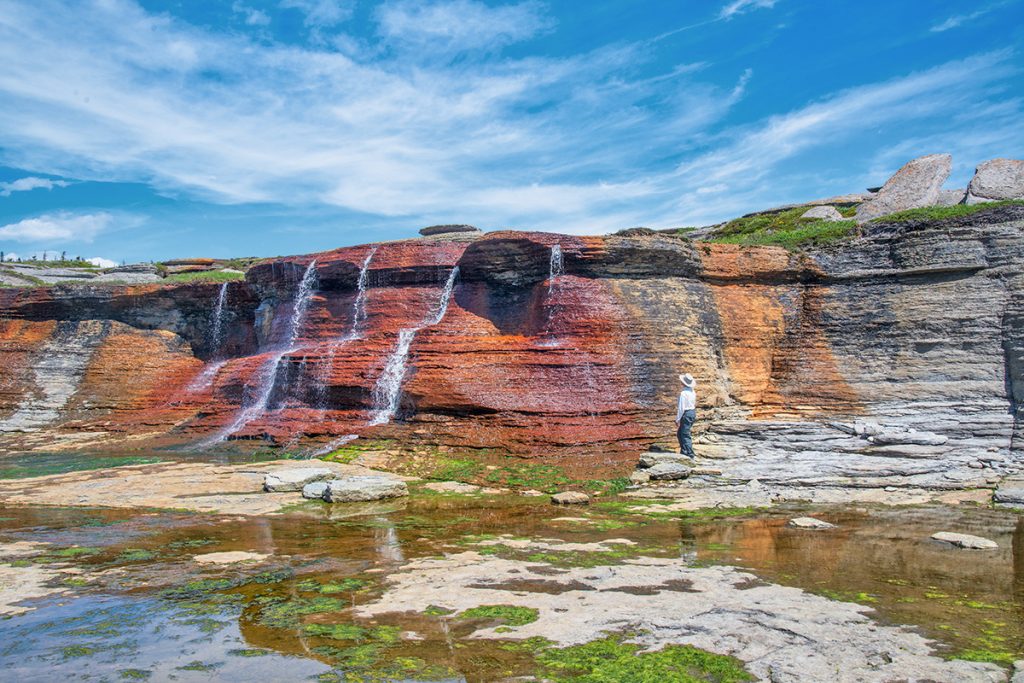
While in Havre St-Pierre, it’s worthwhile heading about 20 minutes farther east along Highway 138 to Cap Ferré. A remote point at the end of a gravel road has a trailhead for an easy coastal hike. Just walk as far as you like, then turn around to come back. A couple of hours is enough to take in the wildly colourful red rock cliffs where small waterfalls seem to seep out of the rocks.
Travel Tips for Quebec’s Côte-Nord
Getting to the Côte-Nord
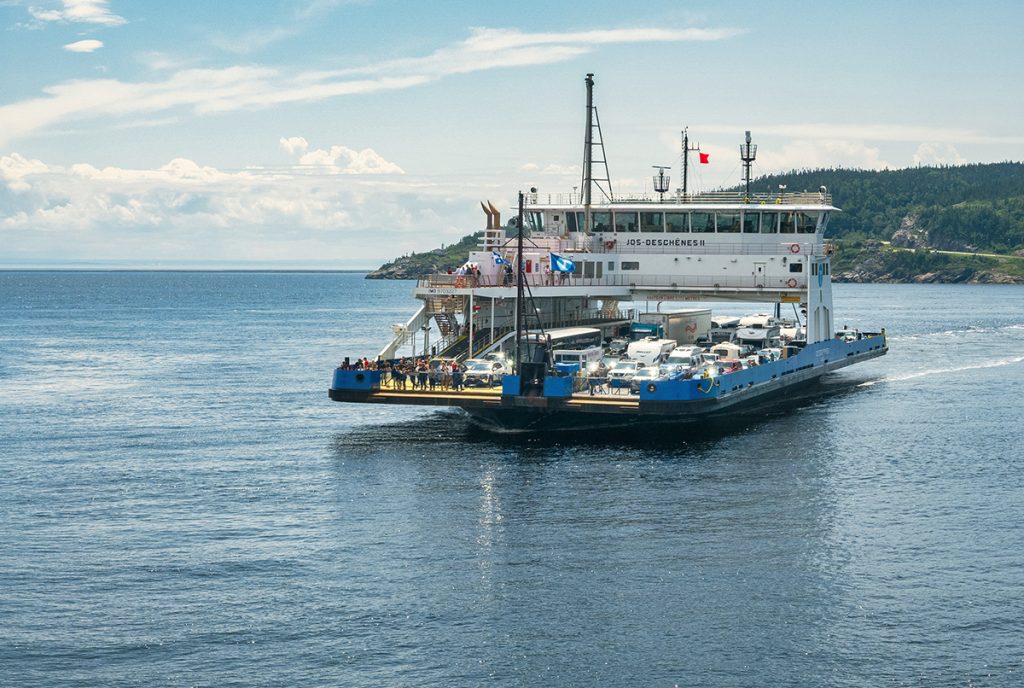
Tadoussac, at the start of the route, is about 220 kilometres northeast of Quebec City, travelling the coastal route through the Charlevoix Region. To reach Tadoussac, take the free ferry across the Saguenay Fjord, providing a dramatic entrance to the region. Yet another option is to travel north of Quebec City to the city of Saguenay and tour the Saguenay-Lac-St-Jean Region on the way to Côte-Nord.
When to Go
Anytime during the summer is ideal to visit. The main window for seeing nesting puffins at Île aux Perroquets runs from late June to early August. We were pleasantly surprised to find many places were not overly busy or crowded during our early July visit, except for highly popular Tadoussac. Many Quebec residents take their summer holidays during the last week in July and the first week in August, so things tend to be busier then. Going off-season is certainly an option, although some excursions and attractions may not be open.
Quebec Maritime has more ideas for road trips, where to stay, and tips for visiting the region.
For more things to do in Quebec, check out our other travel guides below: