
Discover 6,000 Years of History at Wanuskewin Heritage Park
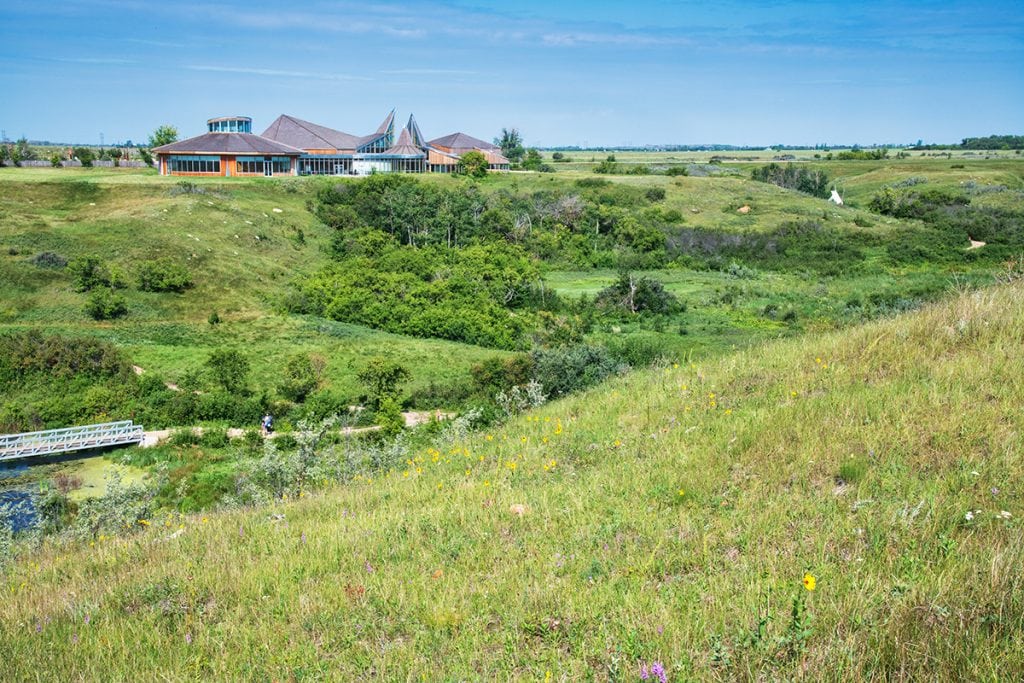
Long before the famous cathedrals of Europe, the Great Wall of China, or even the Egyptian pyramids, people were using this scenic valley just outside present-day Saskatoon. Now preserved as Wanuskewin Heritage Park, the rich archaeological record spanning over 6,000 years is helping it be recognized as a UNESCO World Heritage Site, which the United Nations Educational, Scientific, and Cultural Organization deems of outstanding value to humanity.
A visit to Wanuskewin is an eye-opener to anyone who thinks that Western Canada has a relatively short history. While other ancient sites have also been unearthed, what sets Wanuskewin apart is its continual use over the centuries.
“Every cultural group that we recognize in pre-contact times on the entire Northern Plains was here,” explained Dr. Ernie Walker, the archaeologist who investigated the site for 40 years. “It was like a magnet drawing people in.”
Today, Wanuskewin is a window into that fascinating past as well as the evolving cultures of Northern Plains Indigenous peoples. It has won a long list of awards over the years, including the Best Indigenous Tourism Destination in Canada.
A Place of Sanctuary
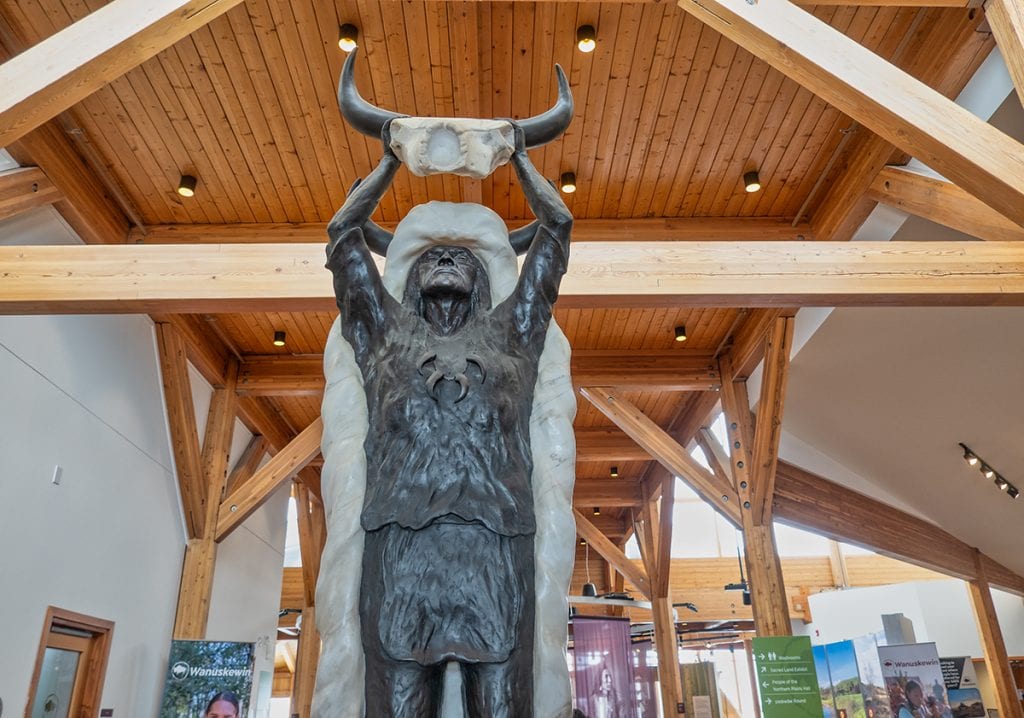
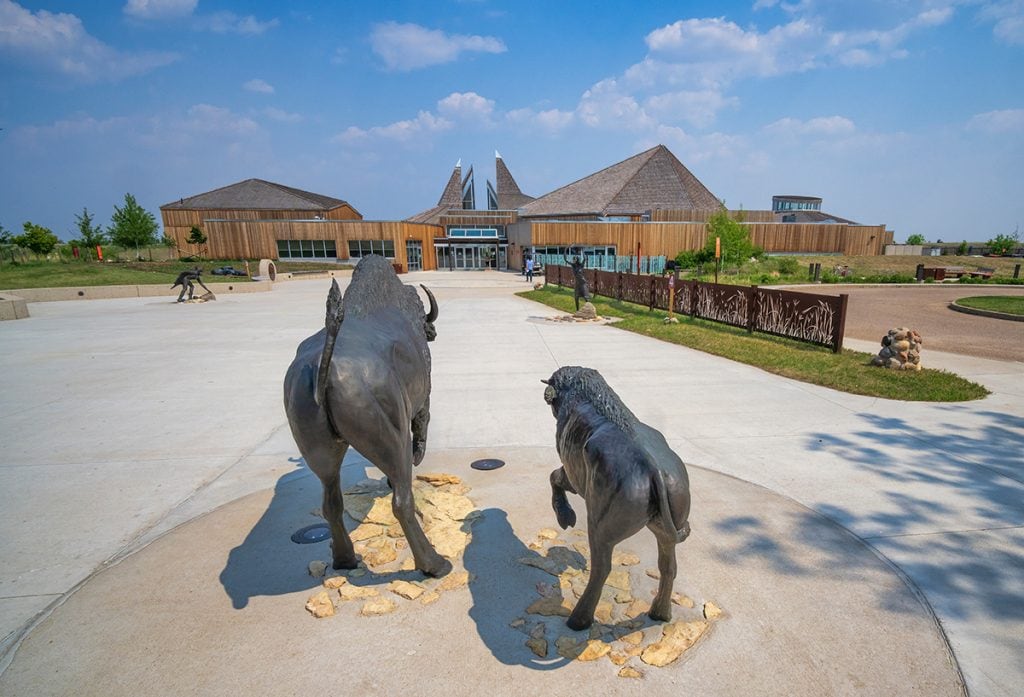
We get a sense for Wanuskewin’s importance before even entering the Visitor Centre. Sculptures of running bison occupy the central walkway in front of the entrance, while on each side, sculptures represent stone cairns and people wearing bison hides and waving their arms. It’s a classic drive lane, meant to channel stampeding animals towards the edge of a precipice where they fall to their deaths. The land looks deceptively level, but just beyond where the visitor centre now stands, it suddenly drops over a cliff into the creek valley – the prefect hunting spot.
But the importance went well beyond hunting. The valley provided shelter (a rough translation of the Cree word Wanuskewin is “sanctuary”), a place to gather plants, and to perform spiritual ceremonies. One significant feature on the site is a medicine wheel, a mound with an outer circle of stones, believed to have ceremonial importance. This is the most northerly one documented throughout the Great Plains. While difficult to date, estimates put it at around 1,500 years old.
The large visitor centre tells Wanuskewin’s story, how it started with a cattle farm where Opimihaw Creek meets the South Saskatchewan River, just a few minutes’ drive north of Saskatoon. The owner recognized the valley’s historic significance and, in the 1980s, contacted Ernie Walker at the University of Saskatchewan to take a closer look. This was the start of what would become the longest-running archaeological dig in Canada.
Ernie Walker later became one of the founders of Wanuskewin, in association with Saskatchewan First Nations and other partners. The make-up of the park is unique in that it is not a government-administered historic site, but rather a community-run, non-profit charitable organization.
Return of the Bison
Bison were central to the life of the people who lived here over the centuries. So when the bison returned in 2019, something that the park’s founders had envisioned from the beginning, it was considered a major turning point. It was important that these were not just any old bison, but genetically pure animals that at one time would have roamed this area.
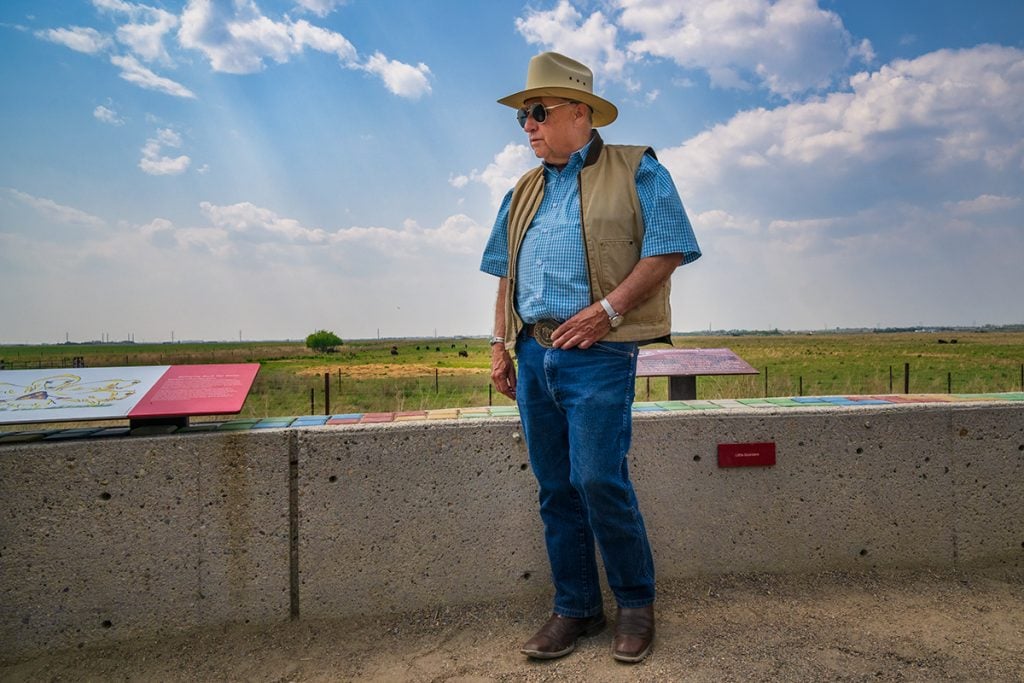
As the iconic symbol of Wanuskewin, the bison is more than just an animal. It was the mainstay of Northern Plains life and is still seen as a spiritual animal today. For many visitors, seeing the bison is a highlight. A viewing platform has been set up on the edge of the bison enclosure holding the herd that has grown to more than 50 animals.
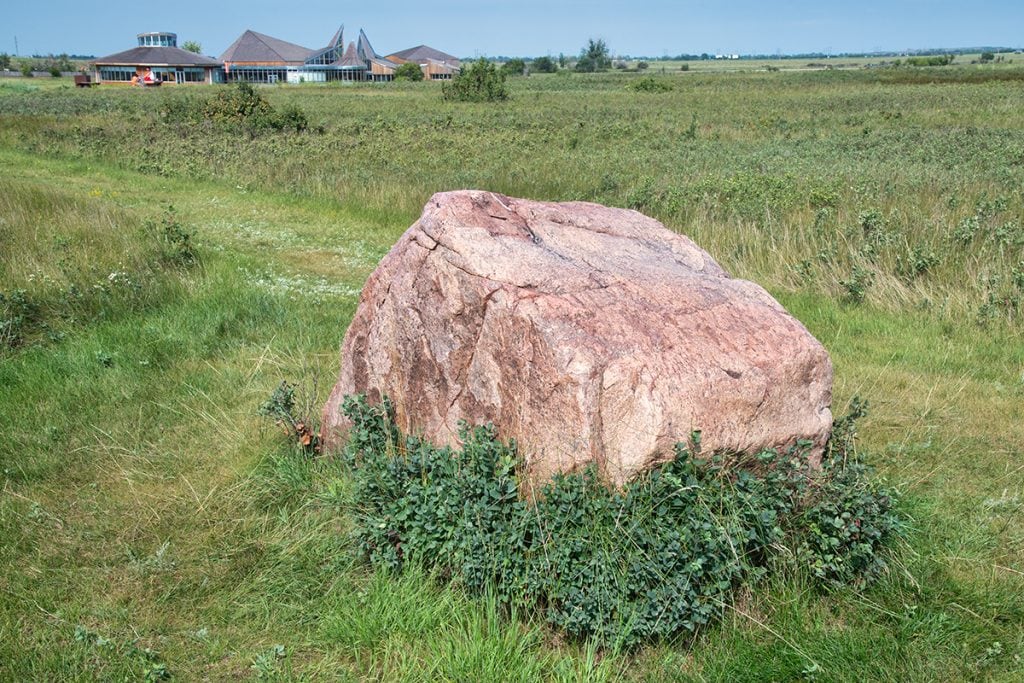
One of the exhibits in the Visitor Centre is a petroglyph, where images have been carved into the surface of a rock, in this case a ribstone representing the ribs of an animal. Ernie Walker attributes its discovery to the bison. He tells the story of when he was walking in an area where the bison had been pawing the ground and noticed the tip of a boulder that wasn’t previously visible. Further investigation found that this, along with three other rocks, had carvings. One was put on display while the other three were left in place.
Modern-day Culture
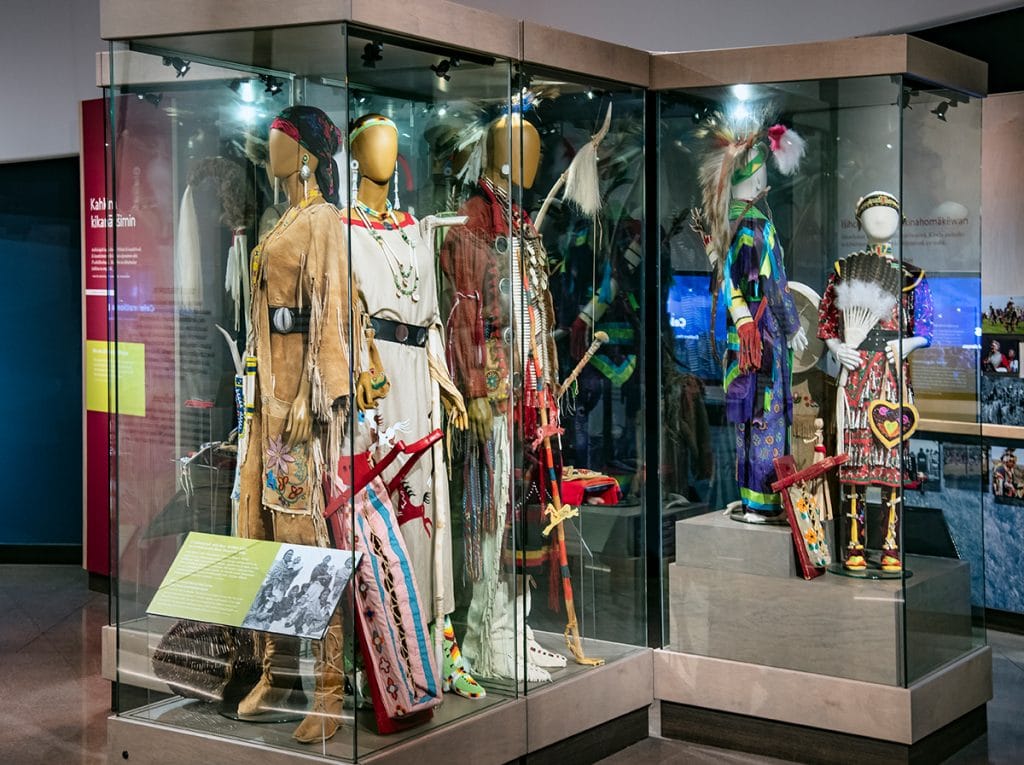
Wanuskewin isn’t only about the past, since its mandate is to show the evolving nature of Northern Plains people. Present-day Indigenous culture is also a significant component, with exhibits on artwork, medicine bags, traditional baskets, ceremonial dress, and more. We can learn the Cree names of moons for different months and their meanings.
One display really brought home how the people of the plains incorporated the bison into their everyday lives. Bison bones were used for making tools such as spoons, knives, scapers and even sleds. Sinew provided thread, and internal organs served as containers.
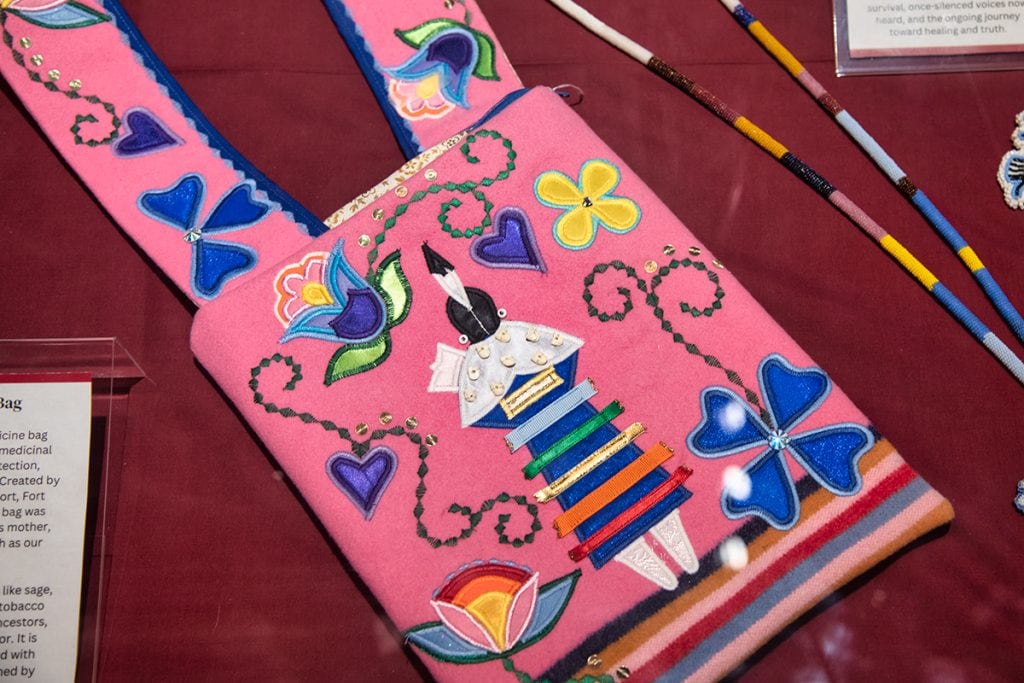
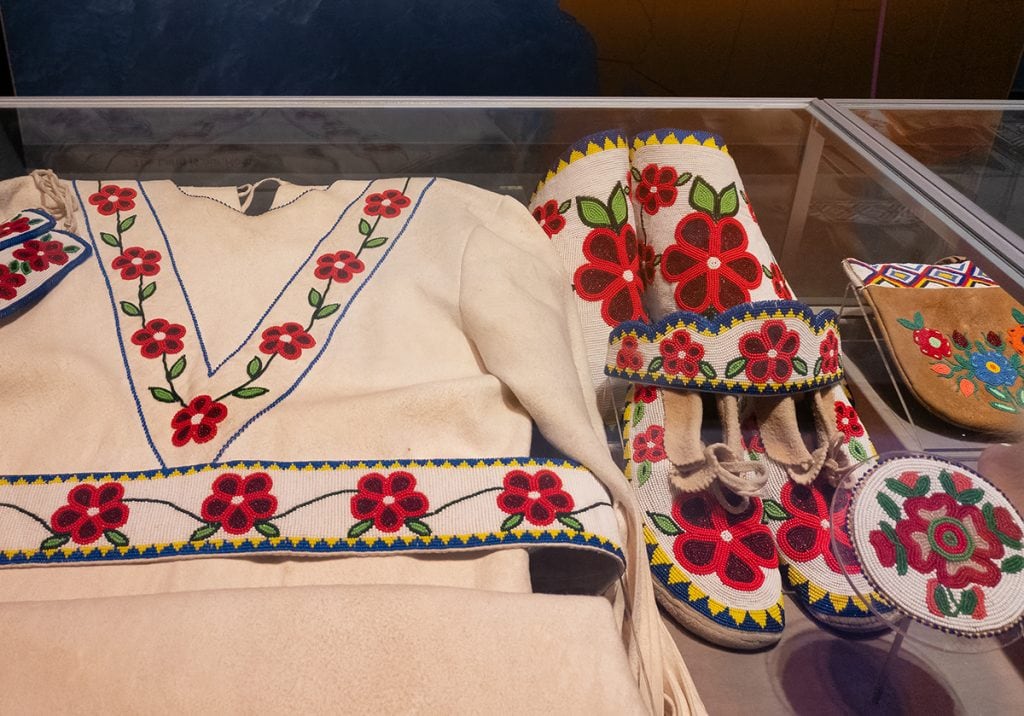
Stunning examples of beadwork form another exhibit, showing how some designs can belong to certain families or clans, and how European motifs, such as flowers, form decorations alongside traditional geometric patterns.
Art galleries feature changing exhibitions on Indigenous themes with paintings, sculptures, and other art forms, as well as having an active artist-in-residence program. And the restaurant is always a popular spot, serving Indigenous-inspired specialties such as wild rice salad, baked bannock, roast bison and burgers, saskatoon-berry desserts, and even traditional muskeg tea made from the leaves of the shrub known as Labrador tea.
The biggest crowd pleasers are the music and dance presentations that take place throughout the year, primarily on weekends. When they demonstrate powwow dancing, it’s not simply a performance but also includes an explanation of the different dances and details about the dancers’ regalia. We learn that the chicken dance mimics the courtship moves of prairie chickens, for example, and how the women’s jingle dance has a long tradition in healing.
Hit the Trails
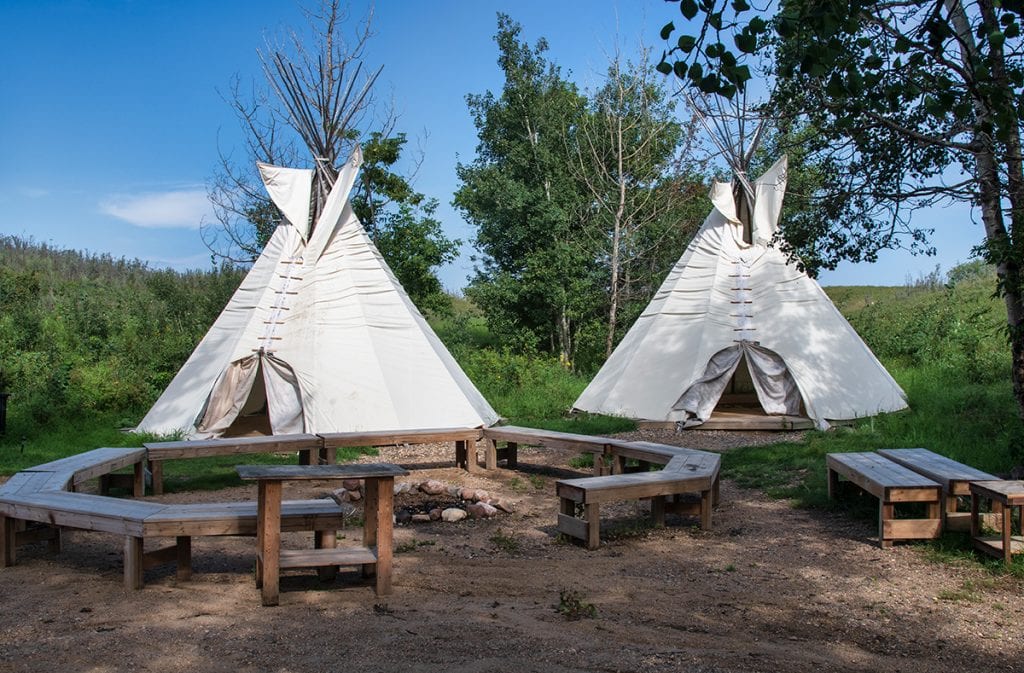
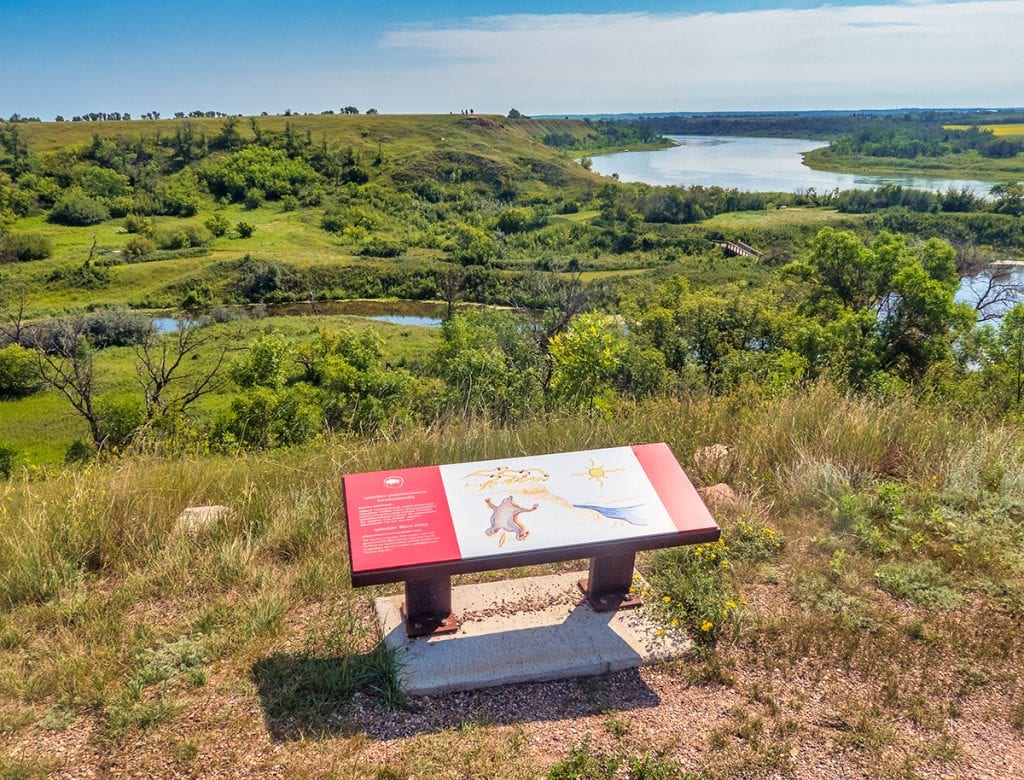
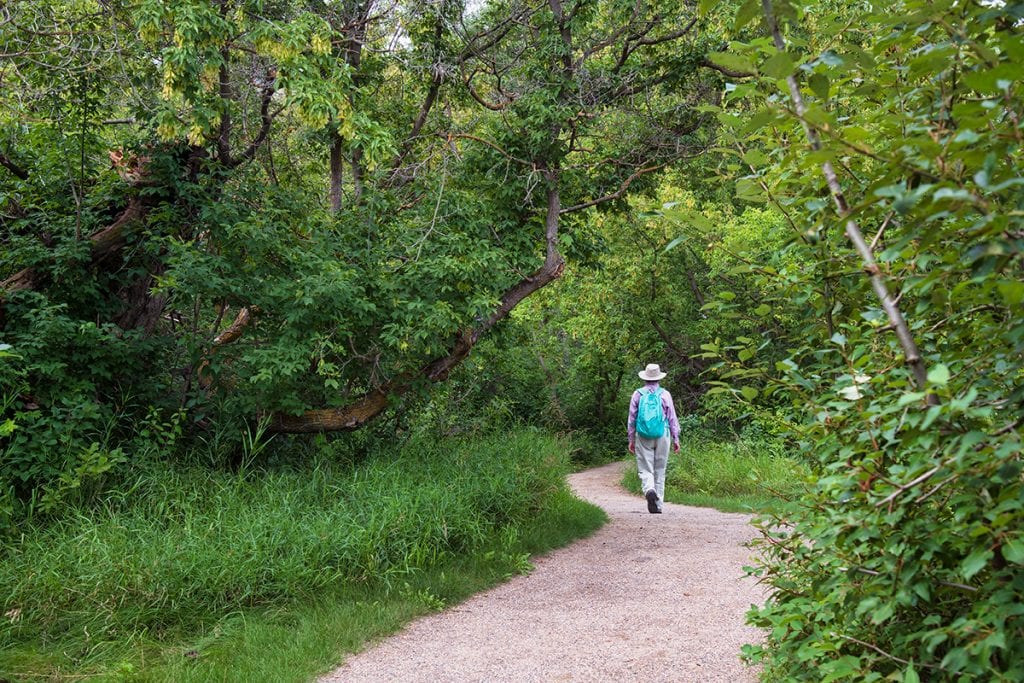
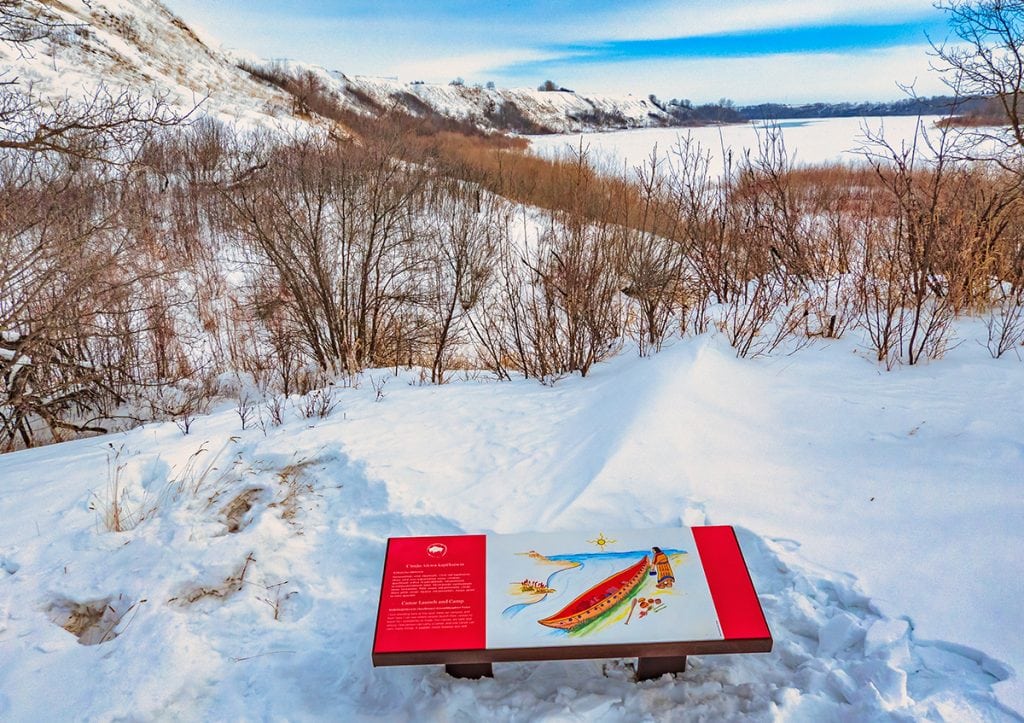
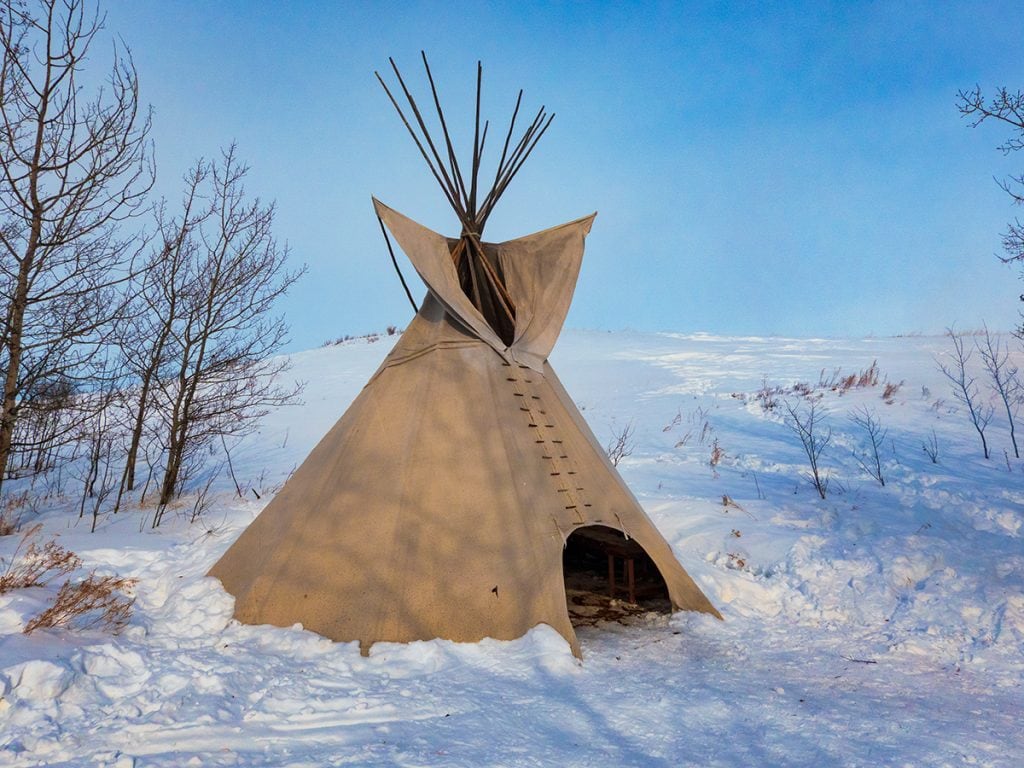
We can explore the extensive grounds on seven kilometres of trails that wind into Opimihaw Creek valley and along the valley rims to the South Saskatchewan River. Along the way, we pass a tipi encampment, where programming is sometimes held, as well as ancient tipi rings, a bison rubbing stone, and the medicine wheel. Interpretive panels help to give context to various features.
Besides the historic significance, it’s a beautiful valley to explore, with wildflowers, bushes with chokecherries and red buffalo berries, the meandering creek, and sweeping views from the high banks of the river. We can wander on our own or take a guided tour.
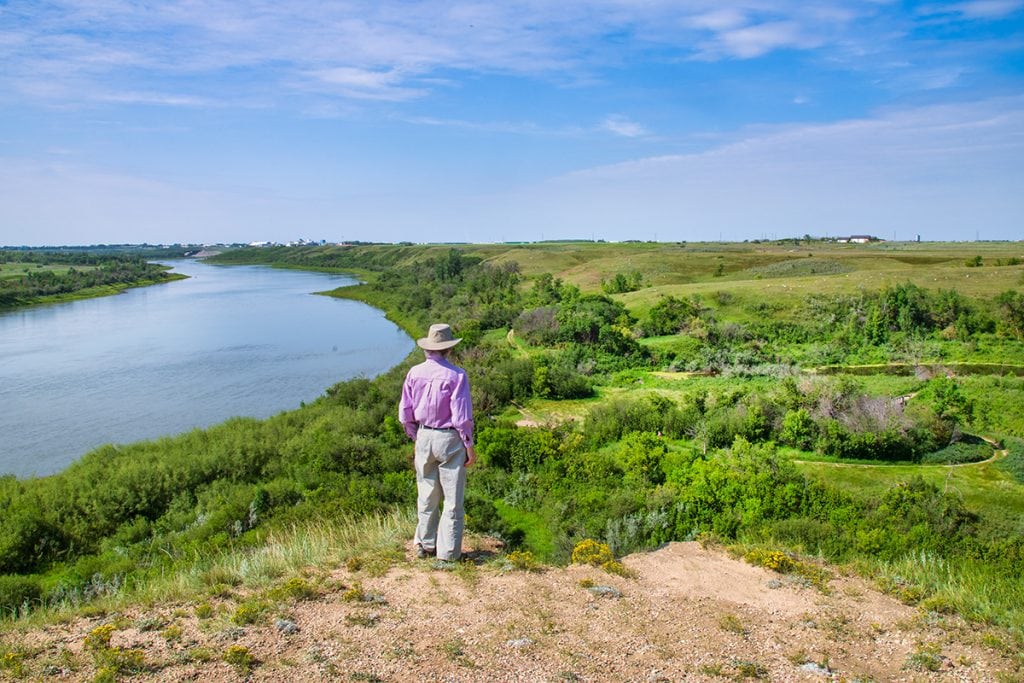
The natural grasslands of North America are among the most endangered biomes in the world. So, having remnants such as this on the edge of an urban area is extra special. Parts of the park that have been disturbed over the years are undergoing restoration, in conjunction with grazing by bison. This has already made a difference, with more grassland birds showing up, including rarities such as the loggerhead shrike, which hasn’t been seen in the area for years.
Winter is also a special time to wander the trails, many of which remain open. When the snow is deeper, the visitor centre even has complimentary snowshoes that visitors can borrow. It’s when we descend into the protected valley in winter that we can appreciate how it provided shelter in the harsh weather for so many years.
The Road to UNESCO
While there are still a few hoops to jump through before the UNESCO designation is a done deal, Wanuskewin is on the home stretch. It’s been a long, complex process, part of the challenge being how Wanuskewin differs from other sites. The people who occupied the site for so long were nomadic hunter-gatherers. While they left behind extensive evidence of their presence, they were mostly simple objects associated with bison hunting and day-to-day life, such as tipi rings.
“They didn’t build pyramids, they didn’t build great walls or cathedrals,” said Ernie Walker. “This has caused us a little bit of a problem with UNESCO because they like pyramids, cathedrals and great walls.”
But UNESCO has since come around and now describes Wanuskewin as “among the finest examples of pre-contact occupation of the Great Plains of North America.
Wanuskewin is a year-round destination, with much of the programming concentrated indoors during the winter. The park is open daily except between December 25 and January 1, and on statutory holidays between October and April. Because of its location, a visit to Wanuskewin complements the many other attractions in and around Saskatoon.
Have you been to Wanuskewin? Leave us a comment!